

Introduction: Portland’s Urban Landscape Is Changing—Quietly but Rapidly
Portland has always been defined by its neighborhoods. Tree-lined streets, historic homes, walkable blocks, and a strong sense of local identity have long shaped how residents experience the city. Yet beneath that familiar character, a powerful shift is underway. Infill development in Portland is steadily transforming how neighborhoods grow, evolve, and adapt to modern housing demands.
Unlike large-scale developments that expand outward, infill development focuses on building within existing urban areas. It means adding new homes on underused lots, converting single-family parcels into multi-unit housing, and reimagining how space is used in established communities. This approach is becoming increasingly important as Portland faces rising housing costs, population growth, and sustainability goals.
For companies like Aker, infill development isn’t just a trend—it’s a responsibility. Aker’s work sits at the intersection of thoughtful design, regulatory expertise, and neighborhood respect. As Portland changes, infill development offers a way to grow without losing what makes each area unique.
This guide explores how infill development is reshaping Portland neighborhoods, the opportunities and challenges it creates, and how Aker helps homeowners and communities navigate this complex evolution.
What Infill Development Really Means in Portland
Infill development refers to new construction or redevelopment on vacant, underused, or previously developed land within existing urban boundaries. In Portland, this often includes backyard cottages, duplexes, triplexes, fourplexes, and lot partitions that allow multiple homes on a single parcel.
Unlike suburban sprawl, infill development works within the city’s current footprint. It leverages existing infrastructure—roads, utilities, transit, and schools—rather than extending services outward. This approach aligns with Portland’s long-standing commitment to smart growth and environmental stewardship.
From Aker’s perspective, infill development requires a nuanced understanding of zoning codes, neighborhood context, and long-term livability. Every infill project is different because every lot, block, and neighborhood carries its own constraints and opportunities.
It is not about maximizing density at all costs. In Portland, it’s about balancing growth with livability—ensuring new homes integrate visually, functionally, and socially into existing neighborhoods.
Why Portland Is Embracing Infill Development
Portland’s shift toward infill development is driven by multiple converging forces. Housing affordability remains a central concern, with limited land availability pushing prices higher each year. Infill development creates opportunities to add housing without displacing entire communities.
Environmental considerations also play a major role. Compact development reduces car dependency, lowers infrastructure costs, and limits urban sprawl. By building within existing neighborhoods, Portland reduces pressure on surrounding natural areas and farmland.
Aker works within these realities daily. Their projects reflect Portland’s broader goals—creating housing solutions that are efficient, sustainable, and sensitive to community needs.
Infill development also supports generational living. Many Portland homeowners choose to add units for aging parents, adult children, or rental income, allowing families to stay connected while maintaining independence.
The Impact on Neighborhood Character
One of the most debated aspects of infill development in Portland is its effect on neighborhood character. Longtime residents often worry that new construction will disrupt the visual rhythm of their streets or strain shared resources.
Thoughtful infill projects, however, do the opposite. When designed carefully, they reinforce neighborhood vitality by introducing architectural diversity while respecting scale and proportion. Aker prioritizes designs that complement existing homes rather than overpower them.
Neighborhood character is not static—it evolves. It reflects how Portland neighborhoods adapt to changing lifestyles while retaining their core identity.
Zoning Changes and the Residential Infill Project (RIP)
Portland’s Residential Infill Project (RIP) fundamentally changed how residential land can be used. By allowing more housing types in areas once limited to single-family homes, RIP opened the door for broader infill opportunities.
These zoning updates encourage “missing middle” housing—duplexes, triplexes, and fourplexes—that bridge the gap between single-family homes and large apartment buildings. Aker’s experience navigating these zoning changes helps homeowners unlock the potential of their properties without violating regulations.
You can learn more about Portland’s zoning updates directly from the City of Portland’s planning department . Understanding zoning isn’t just about compliance—it’s about strategy. Knowing what’s possible on a site informs smarter design and long-term value.
How Infill Development Supports Housing Affordability
While infill development alone cannot solve Portland’s housing affordability crisis, it plays a critical role. Smaller units, shared land costs, and efficient layouts often result in more attainable housing options.
Aker approaches affordability through smart design rather than shortcuts. Efficient floor plans, durable materials, and long-term performance reduce ownership costs over time, benefiting both homeowners and renters. Affordability isn’t just about purchase price—it’s about ongoing maintenance, energy efficiency, and adaptability as household needs change.
It also reduces the financial burden associated with commuting. By placing homes closer to employment centers, transit hubs, and essential services, residents save on transportation costs, which directly contributes to overall affordability. Aker emphasizes designing units that optimize both space and functionality, ensuring that smaller homes feel open and livable. Furthermore, Aker works with homeowners to incorporate flexible spaces that can adapt to changing family needs, reducing the necessity of moving to larger, more expensive properties in the future.
Sustainability and Environmental Benefits
Portland’s sustainability goals align closely with Infill development. Building within established neighborhoods reduces vehicle miles traveled, supports public transit use, and lowers carbon emissions.
Aker incorporates sustainable building practices into infill projects whenever possible, from energy-efficient systems to materials that perform well in Portland’s climate.
For broader context on sustainable urban development, visit U.S. Environmental Protection Agency for additional guidance.
Sustainable infill development benefits not just individual homeowners, but the city as a whole by reducing long-term environmental impact.
It minimizes urban sprawl, which preserves natural habitats and green spaces on the city’s outskirts. By building within existing urban fabric, communities maintain connectivity and reduce pressure on undeveloped land. Aker often integrates rainwater management systems, green roofs, and energy-efficient appliances into infill projects, aligning sustainability with aesthetics. For homeowners interested in eco-friendly design standards, the U.S. Green Building Council offers resources on LEED-certified residential projects. This approach ensures that each project contributes to Portland’s long-term environmental resilience.
Infrastructure Efficiency and Urban Resilience
Existing neighborhoods already have infrastructure in place. Infill development makes better use of these systems, improving overall efficiency without requiring costly expansion. Aker evaluates infrastructure capacity early in the planning process, ensuring new development integrates smoothly with existing utilities and services.
Efficient infrastructure use strengthens urban resilience, helping Portland adapt to population growth and climate challenges. It encourages the use of shared infrastructure, such as district heating, community water management, and local public transit, reducing redundancy in utility networks. Aker coordinates closely with municipal planners to optimize water, energy, and waste systems for new units, ensuring minimal disruption to existing neighborhoods. Thoughtful infrastructure planning also enhances disaster preparedness, as efficient drainage, power, and communication systems increase the city’s resilience during extreme weather events or unexpected growth surges.
Community Concerns and Public Perception
Community response to infill development is mixed. While some residents welcome new housing options, others fear congestion, parking issues, or loss of privacy.
Aker believes transparency and communication are essential. By engaging early with homeowners and respecting neighborhood context, infill projects can gain broader acceptance.
Community trust grows when development feels intentional rather than imposed. Effective community engagement also addresses aesthetic and cultural concerns. Aker hosts neighborhood workshops and provides visual simulations to demonstrate how new infill projects will integrate with existing streetscapes. This transparency allows residents to provide feedback and see their input reflected in final designs, fostering trust. Additionally, highlighting benefits such as increased local commerce, safer streets due to more active occupancy, and enhanced green spaces can shift public perception from skepticism to support.
Architectural Innovation in Infill Projects
Tight sites, irregular lots, and zoning constraints push designers to think differently. Aker collaborates with architects who understand how to maximize light, privacy, and function within compact footprints—creating homes that feel spacious despite smaller lot sizes.
Innovation in infill design often leads to solutions that later influence broader residential architecture trends. Beyond spatial efficiency, infill development often encourages the use of innovative construction materials and modular techniques. Aker experiments with prefabricated components, lightweight structural elements, and sustainable finishes to meet design constraints without sacrificing quality. These methods reduce construction timelines, minimize on-site waste, and allow for customization that responds to neighborhood character. As a result, infill projects not only solve practical challenges but also become models for forward-thinking urban design.
Economic Benefits for Homeowners
Adding units can generate rental income, increase property value, or provide flexible living arrangements. Aker helps homeowners evaluate these options realistically, considering construction costs, long-term returns, and market conditions. It is not just a building decision—it’s a financial planning decision. It can also improve financial stability by diversifying property use. For instance, homeowners can combine live-work units, short-term rentals, or accessory dwelling units (ADUs) to generate additional revenue streams. Aker assists clients in understanding local zoning regulations and tax implications, ensuring that financial benefits are both legal and sustainable. By integrating smart financial planning with thoughtful construction, homeowners can turn infill projects into long-term wealth-building opportunities.
The Role of Aker in Portland’s Infill Landscape
Aker’s experience in Portland positions them uniquely within the infill development space. Their understanding of local codes, neighborhood expectations, and construction realities allows them to guide projects from concept to completion.
Rather than applying a one-size-fits-all approach, Aker tailors each infill project to its site and surrounding community. This philosophy supports Portland’s broader goal of thoughtful urban growth.
Aker’s role extends beyond construction—they act as advisors, problem-solvers, and long-term partners for homeowners navigating infill development. Aker also provides post-construction support, helping homeowners maintain their properties and adapt them as neighborhood conditions evolve. This may include retrofitting for energy efficiency, adding privacy features, or improving accessibility. By positioning themselves as both builders and ongoing partners, Aker ensures that infill developments remain valuable and functional long after initial occupancy, strengthening both individual investments and community cohesion.
Common Challenges in Infill Development
Infill projects face challenges including permitting complexity, site access limitations, and coordination with existing structures. These challenges require experience and foresight.
Aker mitigates risk through detailed planning, clear timelines, and proactive problem-solving—reducing surprises during construction.
Challenges are inevitable, but experienced execution determines whether they become setbacks or manageable steps. Navigating community approval boards, environmental impact assessments, and zoning restrictions requires expertise beyond traditional construction knowledge. Aker’s experience allows them to anticipate potential obstacles and design strategies to mitigate delays. Additionally, limited lot sizes often require innovative construction logistics, such as staged deliveries and temporary access solutions, which minimize disruption to neighbors and maintain safety standards throughout the building process.
Future Trends in Portland Infill Development
As housing needs evolve, infill development in Portland will continue to diversify. Expect to see more flexible layouts, multi-generational housing, and designs that adapt over time.
Aker stays ahead of these trends by continually refining their approach and learning from each project.
The future of infill development lies in adaptability—homes that evolve as neighborhoods change. Emerging trends also include integrating technology for smart living environments. Homes are being equipped with energy monitoring, automated shading, and IoT-enabled appliances that optimize resource use and enhance quality of life. Aker embraces these innovations, ensuring that infill projects are not only functional today but also adaptable to future advancements. This forward-looking approach positions both homeowners and neighborhoods to benefit from evolving urban trends while maintaining character and livability.
Conclusion: Infill Development as Portland’s Path Forward
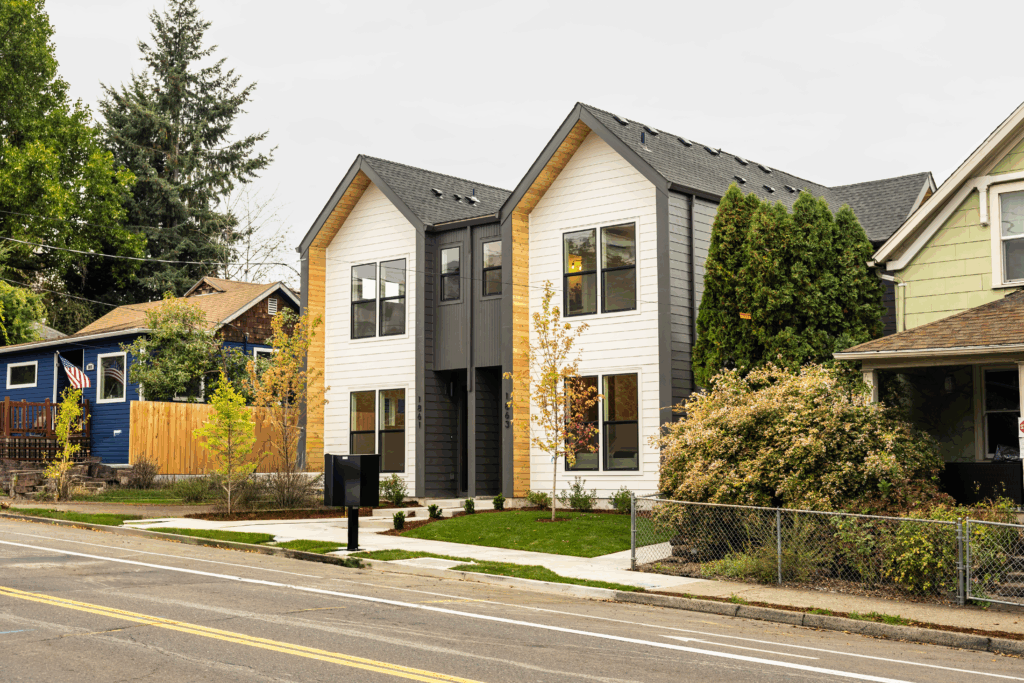
Infill development in Portland represents more than new housing—it reflects how the city chooses to grow. By building within existing neighborhoods, Portland preserves its natural surroundings while responding to real housing needs.
For Aker, it is an opportunity to contribute meaningfully to Portland’s future. Their work demonstrates that growth and neighborhood integrity can coexist when guided by experience, respect, and thoughtful design.
As Portland continues to evolve, infill development will shape not only the city’s physical form but also how communities live, connect, and thrive. Homeowners considering infill projects don’t have to navigate this process alone. With Aker as a partner, it becomes a collaborative effort—one that strengthens both individual properties and the neighborhoods they belong to.
External Links
- City of Portland Bureau of Planning and Sustainability
- U.S. Environmental Protection Agency – Smart Growth
- U.S. Green Building Council
Internal Links
- /custom-homes/
- /sustainable-building/
- /home-remodeling/
